
Juice Reel: Bet Tracker & Tips
Juice ReelSports
4.7350.00 Reviews
- Version
- 5.2.28
- Installs
- 100.00K
- Age Rating
- Everyone
Screenshots
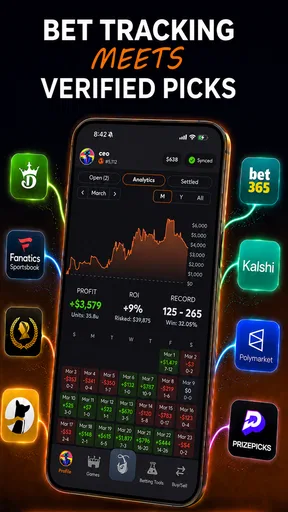


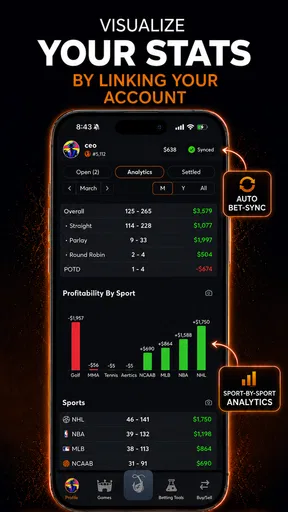


Our Review of Juice Reel: Bet Tracker & Tips
 Analysis by Appyee
Juice Reel: Bet Tracker & Tips is a sports app aimed at people who want a clearer record of their betting activity and a way to explore picks in one place. I found its main appeal easy to understand: instead of leaving bets scattered across several sportsbook accounts, notes apps, screenshots, and memory, it tries to turn that information into something you can review. The service is developed by Juice Reel and is available free of charge, with optional in-app purchases ranging from $0.99 to $499.99 per item.
That basic idea matters more than it may seem. Betting apps are usually designed to help you place a wager, not to help you understand your habits afterward. This one approaches the problem from the tracking side. It is listed in the sports category, carries an Everyone age rating, and has reached over 100 thousand installs. Its average score is 4.7 from around 1.4 thousand ratings, which suggests that the central workflow connects with many users. My question, though, was whether it would still feel useful after the first burst of curiosity disappeared.
What makes the first week appealing
The first few sessions are naturally interesting because the app gives betting activity a single home. Its store summary focuses on bet tracking and a marketplace for verified picks, with bet syncing from more than 300 sportsbooks. That combination separates it from a simple betting journal. A manual spreadsheet can record a wager, but it cannot offer the same convenient starting point when your activity is spread across different books.
I especially like the idea of beginning with observation rather than immediately chasing another pick. Once your wagers are gathered into one view, you can look for patterns that are almost impossible to notice while jumping from one sportsbook to another. Are you more disciplined with single bets than combinations? Do certain sports tempt you into frequent small wagers? Are you remembering wins more vividly than losses? A tracker is valuable when it makes those questions visible.
The syncing concept is also the app’s most practical distinction from ordinary alternatives. A blank notes document gives you complete freedom, but that freedom becomes work. You have to remember every wager, enter the details consistently, and keep the record updated. Juice Reel is more useful for someone who wants structured information without building a personal database from scratch. The trade-off is that the experience depends on setting up and maintaining the relevant connections properly.
During the first week, the picks marketplace adds another reason to return. It gives users something to browse even when they are not entering a bet. That can be convenient for someone who wants to compare ideas, but I would not treat a listed pick as a substitute for judgment. The useful question is not simply whether a pick looks attractive. It is whether the reasoning fits your own limits, preferred sport, available book, and willingness to accept a losing result.
A realistic everyday scenario would be a user checking several sportsbook accounts during a busy weekend. Rather than trying to remember which book holds each wager, the user can use the tracker as a central reference, then review the day afterward. That is a small change, but it can reduce the mental clutter that encourages impulsive decisions. The best early benefit is therefore not excitement; it is visibility.
Where the app differs from a spreadsheet or sportsbook history
Most sportsbook histories are useful only inside their individual apps. They show what happened with that operator, while a personal spreadsheet can combine everything but requires steady manual input. Juice Reel sits between those approaches. Its appeal comes from aggregation and a betting-focused environment rather than from unlimited customization.
That middle ground will suit users who want more structure than scattered account histories but less administrative work than a carefully designed spreadsheet. It may be less satisfying for someone who enjoys controlling every column, formula, label, and category. A spreadsheet also avoids the temptation of a picks marketplace, which may be an advantage for users who want analysis without additional betting prompts.
One non-obvious benefit of central tracking is that it can improve the quality of your own decisions even when you never use the marketplace. You can treat the app as a mirror rather than a tip source. Before placing anything, review your recent activity and ask whether the new wager adds a reasoned position or merely continues a pattern. That habit gives the tracker lasting value beyond its discovery features.
Why the value can continue from month to month
The app earns a regular place on a phone only if its records become more useful over time. A tracker has a natural advantage here: a single day of information is limited, while a longer history can reveal behavior. Monthly review is where I think the product has its strongest long-term case. Instead of judging yourself by the last result, you can examine how often you bet, how varied your activity is, and whether your decisions match the rules you intended to follow.
I would use it as a review tool on a fixed schedule rather than opening it constantly. For example, a short check at the end of a week could identify missing or incorrectly synced activity, while a deeper monthly look could focus on habits. This approach avoids turning the app into another source of continuous stimulation. The tracker becomes a record-keeping routine, not a reason to search for something to bet on every time you unlock your phone.
The marketplace can also have recurring value when used selectively. A user who follows particular sports or styles of betting may appreciate having ideas gathered in one environment. Still, the long-term usefulness depends on filtering. Browsing every available suggestion can become tiring and may blur the difference between research and entertainment. I would rather save attention for picks that fit a defined plan than treat the marketplace as an endless feed.
That distinction is important because a tracker and a tip marketplace encourage different behaviors. Tracking asks you to slow down and evaluate what you have already done. Picks invite you to consider what you might do next. The app is strongest when the first function controls the second. If the marketplace becomes the main reason you open it, the reflective value can be lost.
There is also a useful workflow for people who share responsibility for a betting budget with a partner or simply want stronger personal accountability. Reviewing one consolidated record makes conversations more concrete than relying on memory. You can discuss the total pattern, the timing of wagers, and whether the activity still fits the budget. I would not use any tracker as a guarantee of responsible behavior, but making activity easier to see is a practical step.
How I would build a sustainable routine
My recommendation is to establish rules before exploring the marketplace. Decide which sports you follow, how often you will review the account, and what information you need to judge a wager afterward. Then use the app to support those rules. This reverses the usual order, where a new pick creates the plan.
A second useful habit is to separate tracking from evaluation. First make sure the record is complete and accurate. Only then decide whether your results or choices deserve a change in strategy. Mixing those steps can lead to emotional reactions, especially after a surprising win or loss. The app can organize the evidence, but you still need patience when interpreting it.
Finally, use the tracker to identify friction in your own process. If you repeatedly ignore certain records, struggle to distinguish types of bets, or open the picks area without a clear purpose, that tells you something. The answer may be to simplify your routine, not to spend more time inside the app. This is one of the more valuable long-term insights: a good tracking tool should eventually help you need less excitement from the tool itself.
Maintenance, setup, and the parts that can become tiring
The largest practical burden is not learning the interface; it is keeping the information trustworthy. Bet syncing promises convenience, but convenience still requires attention. Connections may need checking, and users should make sure that activity from their different books is represented as expected. I would not assume that an automated record removes the need for occasional review.
That maintenance is manageable for an active bettor with several accounts, because the alternative is more manual work. For someone who places only an occasional wager through one sportsbook, the benefit may be smaller. The sportsbook’s own history could already be sufficient, and adding another app might feel like unnecessary administration. This is a clear case where the usual alternative may be better simply because the user’s needs are modest.
Another point to consider is the difference between a free download and a completely cost-free experience. The app itself is free, but optional in-app purchases are listed from $0.99 to $499.99 per item. I would approach those options carefully and decide in advance whether I need anything beyond the core tracking experience. A free entry point is helpful, but it should not be mistaken for a reason to explore every paid feature automatically.
The age rating is Everyone, which makes the app broadly accessible from a store-classification perspective. That does not change the adult nature of wagering decisions. Anyone using it should think seriously about local rules, personal finances, and whether betting is affecting mood or daily responsibilities. The app can organize activity; it cannot set a safe limit for you or recognize when continuing is a bad idea.
Version 5.2.28 shows that the product is being maintained as an evolving service rather than treated as a one-time utility. That is encouraging for a tracker whose value depends on continued compatibility and refinement. At the same time, updates can mean that menus, syncing behavior, or marketplace presentation change over time. I would keep the app current, then recheck my preferred workflow after an update instead of assuming every setting remains exactly where I left it.
What creates fatigue after the novelty fades
The first source of fatigue is repetition. Once your activity is organized, reviewing the same categories can feel routine, particularly if you are not using the information to make a specific decision. That is not necessarily a flaw; record-keeping is supposed to be less exciting than placing a bet. Still, users who expect a constant stream of fresh insight may lose interest.
The second is the tension between analysis and temptation. A marketplace of picks can make the app feel active, but frequent exposure may encourage users to keep searching for an opportunity. If your goal is to reduce impulsive betting, you may need to limit when you browse that area. I would schedule research rather than use it as a reflex whenever there is a game on.
The third is trust in the record. When several accounts and sources are involved, even a small discrepancy can undermine confidence. The right response is not to abandon the app immediately, but to verify the relevant entry and keep a personal note of anything that needs checking. If you strongly prefer complete manual control, a spreadsheet may remain the better fit despite its extra effort.
There is also a psychological fatigue that comes from treating every result as a verdict. A tracker can show outcomes, but outcomes alone do not prove that a decision was sensible or foolish. A carefully considered wager can lose, and a poorly considered one can win. I would use the app to review process as well as results. That keeps the monthly routine from becoming an emotional scoreboard.
Who should use it and who should skip it
I think the app is best for bettors who use more than one sportsbook, want a consolidated record, and are willing to review their activity honestly. It is also a good match for people who like exploring sports picks but want that exploration connected to a broader record rather than kept entirely separate. The combination of tracking and discovery gives it more depth than a plain notes app.
It is less suitable for someone who wants a completely private, manual, highly customizable ledger. That person may prefer a spreadsheet or finance-style journal. It is also not the right choice for someone looking for guaranteed outcomes, automatic discipline, or a replacement for personal research. No marketplace can remove uncertainty from sports, and no tracker can make a risky habit harmless.
Users who are easily drawn into frequent betting should be especially deliberate. The app’s organizational tools may help create awareness, but the picks area could also add another prompt to engage. In that situation, a simple record with fewer discovery features might be safer and more aligned with the user’s goals.
For a casual user with one account and very few wagers, the setup may not justify the return. The value increases as the problem becomes more complex: multiple books, repeated activity, a desire to compare decisions over time, or a need to create accountability. That is the central trade-off I would explain to a friend before recommending it.
My long-term verdict
The lasting value of Juice Reel comes from turning betting history into something you can learn from, not from keeping you busy with new picks. In my view, that makes it more durable than a typical promotional or novelty-focused sports app. The bet-syncing concept addresses a real organizational problem, and the marketplace gives the service a reason to remain relevant between reviews.
Its limitations are equally clear. Maintaining confidence in synced records takes occasional attention. The range of optional purchases means users should set boundaries before spending. The marketplace can be useful, but it can also compete with the reflective purpose of tracking. And for a person with very little betting activity, a sportsbook history or basic spreadsheet may be simpler.
The app is free to start, has an Everyone rating, and its 4.7 average from roughly 1.4 thousand ratings indicates strong user satisfaction. Those details make it easy to try, but the real test is behavioral: after the first week, do you still use the record to make calmer decisions? If yes, the app can earn permanent space on your phone. If you only open it to browse the next pick, its deeper advantage is being missed.
My final recommendation is to install it with a specific purpose: consolidate your accounts, establish a review routine, and use the information to judge your habits. Give the marketplace a secondary role and treat paid options with restraint. Used that way, Juice Reel is a thoughtful sports companion for organized, self-aware bettors. Used as an endless source of betting prompts, it is much less compelling and may be the wrong tool for your goals.
Verdict
Strengths of Juice Reel: Bet Tracker & Tips
- Tracks bets across multiple sportsbooks in one place
- Clear profit and loss summaries help monitor performance
- Useful filters make reviewing betting history quick
- Community insights can reveal popular picks and trends
- Clean interface is easy to navigate on mobile
Limitations of Juice Reel: Bet Tracker & Tips
- Some sportsbooks may require manual bet entry or correction
- Advanced analytics and features may be limited to paid plans
- Tipster picks do not guarantee accurate or profitable results
- Requires access to betting account data for full convenience
- Availability and features can vary by country and sportsbook
Similar Picks in This Category
View All
BeSoccer: Soccer Live Score
BeSoccer apps4.3

Cricbuzz - Live Cricket Scores
Cricbuzz.com3.7

NFL
NFL Enterprises LLC2.4

Da Fit
MO YOUNG LIMITED3.6

ESPN
Disney4.5

LiveScore: Live Sports Scores
LiveScore Limited4.5
Frequently Asked Questions
What is Juice Reel: Bet Tracker & Tips used for?
Juice Reel is designed to help sports bettors organize, monitor, and review their betting activity in one place. It can provide tools for tracking wagers, viewing performance statistics, identifying betting patterns, and exploring tips or insights. The app is more useful as a record-keeping and analysis companion than as a guarantee of winning bets, so users should treat its information as guidance rather than certainty.
Does Juice Reel place bets directly with sportsbooks?
Juice Reel is primarily a betting tracker and analysis tool, not a sportsbook where wagers are automatically accepted and settled. Depending on the current version and supported integrations, you may need to connect accounts, import bets, or enter wagers manually. Users should carefully review permissions, supported bookmakers, and regional availability before linking any betting account or relying on automatic tracking features.
Is Juice Reel: Bet Tracker & Tips free to download and use?
The app may be available to download at no initial cost, but some features can require a subscription, in-app purchase, or access to a premium plan. Advanced statistics, specialized tips, enhanced tracking, or additional analysis tools may not be included in the basic version. Before using the app extensively, check the store listing and in-app pricing so you understand what is free and what may generate charges.
Can Juice Reel guarantee profitable sports betting results?
No sports betting app can guarantee consistent profits, and Juice Reel should not be viewed as a system that eliminates risk. Its tracking tools and betting insights may help users understand their habits, evaluate past performance, and make more informed decisions, but outcomes still depend on unpredictable sporting events. Always verify information independently, set a budget, and avoid wagering money you cannot afford to lose.
What should I check before downloading and using Juice Reel?
Before downloading Juice Reel, confirm that it is available in your country and supports the sports, leagues, sportsbooks, and devices you use. Review its privacy policy, account permissions, subscription terms, and data-handling practices, especially if you plan to connect betting accounts. You should also check whether the app’s tips are relevant to your region and remember that betting laws and responsible-gambling requirements vary by location.
